
Being present on social media has long been about more than posting frequently. A business can publish every day and still fail to build awareness, trust, or genuine interest in its services. The reason is simple: content only creates value when it is part of a larger system. Well-planned social media content connects audience needs with specific business goals and defines the role each post should play.
A good strategy does not begin with the question, “What should we post this week?” It begins with a clear understanding of the business, the audience, and the result the content should support. This determines which topics to develop, which formats to use, and how each post can contribute to the brand’s overall positioning.
When content has a clear role, social media starts working more purposefully. Some posts can attract a new audience, others can build trust, while others can demonstrate expertise or guide people toward a specific next step. What matters is that the individual elements do not exist in isolation, but complement one another and guide users along a logical path. That is why effective presence is not measured solely by the number of posts, likes, or views. The more important question is whether the content helps the business become more recognizable, more clearly positioned, and closer to achieving a real marketing result.

1. Posting Is Not a Strategy
Posts, videos, and stories are tools. The strategy is the logic behind them. Every piece of content should have a specific role. Some posts build awareness. Others educate. Others demonstrate expertise, create trust, or guide people toward the next step.
When these roles are not defined in advance, a profile can easily become a series of separate ideas without a common direction. A well-structured profile should answer several questions: What do we want the audience to understand about the brand? What problems do we solve? What expertise should become visible? What action do we want to follow the content? How will we measure whether it works?
It is important here to distinguish between activity and strategic presence. Activity shows that a profile is being maintained, but on its own it does not guarantee results. Strategic presence means that every topic, format, and message is chosen for a reason and supports a broader marketing goal.
This also applies to posting frequency. More content does not automatically mean better content. If posts are not relevant to the audience, do not establish a clear position, and do not lead to a specific action, even a high posting frequency may have no real effect.
A strong strategy defines not only what will be published, but also why, for whom, and when. It aligns topics with audience needs, selects the right formats, and creates a logical connection between individual posts. This makes the profile look like consistent communication rather than a collection of unrelated posts.
A good strategy also leaves room for adaptation. Social media is constantly changing, as is user behavior. That is why an effective approach is not to follow a fixed plan at all costs, but to have a clear direction that is adjusted according to results, feedback, and the audience’s actual reactions.
Strong content does more than fill the calendar.
2. Social Media Content Starts with the Business Goal
The goal must be clear before formats and topics are chosen.
If the business wants greater awareness, the content must reach new people and create a clear association with the brand. If the goal is to generate inquiries, the communication must demonstrate value, provide proof, and give people a clear reason to take the next step. This means that the same idea should not be evaluated solely by its likes.
If the primary goal is greater awareness, the content should reach new people and gradually build a clear association with the brand. This can be achieved through consistent topics, a recognizable visual style, clear messages, and content that addresses the audience’s interests and needs.
When the goal is to generate inquiries or sales, the approach is different. The content must then demonstrate specific value, explain what problem the product or service solves, provide enough information to support a decision, and guide the user toward the next step. This could be visiting the website, submitting an inquiry, booking a consultation, or making a direct purchase.
It is important to remember that not every post needs to serve the same function. Some content can attract attention, other content can build trust, and a third part can support conversion. When these roles are defined in advance, overall communication becomes much more consistent.
The most important question is not “How many reactions did this post receive?”, but “What role did it play in the user’s journey toward the business?” It is this connection between content and a specific business goal that transforms social media from a presence channel into a real marketing tool.
How does the goal change the type of content?
Different goals require different approaches to topics, formats, and the way the message is framed. If the primary goal is awareness, content should be easy to understand, clearly connected to the brand, and interesting enough to reach a new audience. Educational topics, short videos, carousels, visual formats, and content people would save or share work well here.
When the goal is to build trust, communication needs to offer greater depth. Expert opinions, real-life case studies, work processes, frequently asked questions, and content that demonstrates experience are suitable. This helps the audience not only understand what the business offers, but also see why they should trust it.
When the goal is to generate enquiries or sales, content needs to be even more specific. It is important to show what problem is being solved, what value the customer receives, and what the next step is. Product demonstrations, comparisons, results, testimonials, specific benefits, and clear calls to action can be used here.
This distinction matters because the same format can serve an entirely different function. A video can be used to reach a new audience, showcase expertise, or direct people straight to a service. What matters is not only what is published, but why that particular format was chosen and what it is intended to achieve.
Not all results are measured in the same way
The business goal also determines which metrics are worth tracking. For awareness campaigns, reach, views, and new profile visits may be more important. For content aimed at building trust, more valuable signals may include saves, shares, watch time, and the quality of comments.
When the goal is to generate enquiries or sales, the focus should gradually shift to website clicks, direct messages, completed forms, booked consultations, and conversions. This allows the business to evaluate content not only by its visibility, but also by its actual contribution to the overall marketing process.
That is why a good strategy does not look for one universal success metric. It connects a specific goal with a specific type of content and the right metrics for evaluation.
3. Core content pillars provide direction and consistency
Core content pillars are the themes around which a brand builds its social media communication. They help make content more consistent, recognisable, and connected to the business’s real goals, rather than having every post created as a separate idea without a broader context.
When these pillars are clearly defined, it becomes much easier to plan content over a longer period. The brand knows which topics it wants to develop, what it wants the audience to remember about it, and how different posts can complement one another.
77% of social media marketers believe authenticity is more important than high production value.
66% of consumers say they have become more selective about the content they engage with compared with the previous 12 months.
59% of social media teams identify increasing brand awareness as their primary goal in 2026.
When these pillars are clearly defined, it becomes much easier to plan content over a longer period. The brand knows which topics it wants to develop, what it wants the audience to remember about it, and how different posts can complement one another.
Data from 2026 clearly shows why content needs to serve more than one function. 77% of marketers prioritise authenticity over high production value, while 66% of consumers are now more selective about the content they engage with. At the same time, 59% of social media teams identify brand awareness as their leading goal. This shows how important it is for communication to combine relevance, consistency, and different types of content, rather than relying solely on posting frequency.
For a business, core content pillars may include, for example:
Expert and educational content;
Product or service presentations;
Case studies, results, and real-life examples;
Processes, team, and behind-the-scenes content;
Content that encourages conversation, feedback, and community.
Each content pillar serves a different function in communication. Expert content demonstrates knowledge and helps build trust. Product and service posts give a clearer idea of what the business offers and the value it provides to customers. Case studies and results add concrete proof, while behind-the-scenes content presents the process, team and way of working in a more natural and accessible way.
This does not mean that every post should look the same or follow the same formula. The same topic can be developed through a video, carousel, short post, Story, interview or another suitable format. It is precisely this variety of formats that keeps content interesting without losing its overall direction.
Well-chosen content pillars also help maintain balance in communication. If a profile talks only about products, its communication may become too one-sided. If it publishes only educational content, the audience may not get a clear enough idea of what the business actually offers. Balancing different types of content creates a fuller, more consistent and recognisable picture of the brand.
This is how social media starts working as an integrated communication system rather than a series of individual posts. Each topic has its own role, but together they build a clear identity, a lasting presence and a stronger connection with the audience.
WANT MORE PRACTICAL IDEAS FOR STRONGER CONTENT?
Get carefully selected tips on strategy, content and digital marketing that you can actually apply to your business communications.
4. Distribution and community are part of the content
A good post does not end the moment it is published. How content is distributed and how the audience responds to it is just as important as the idea itself.
Content can be adapted for different platforms, repurposed, supported with advertising or developed in another form. For example, a strong Reel can become a carousel, a Story series, an article topic or part of an advertising campaign. This gives a good idea a longer life and helps it reach the audience in different formats and at different moments.
It is also important to tailor content to the specifics of each platform.
What works well on Instagram does not always need to be published in the same way on LinkedIn, Facebook or TikTok. The message may remain the same, but the format, length and presentation should reflect audience behaviour on the specific channel.
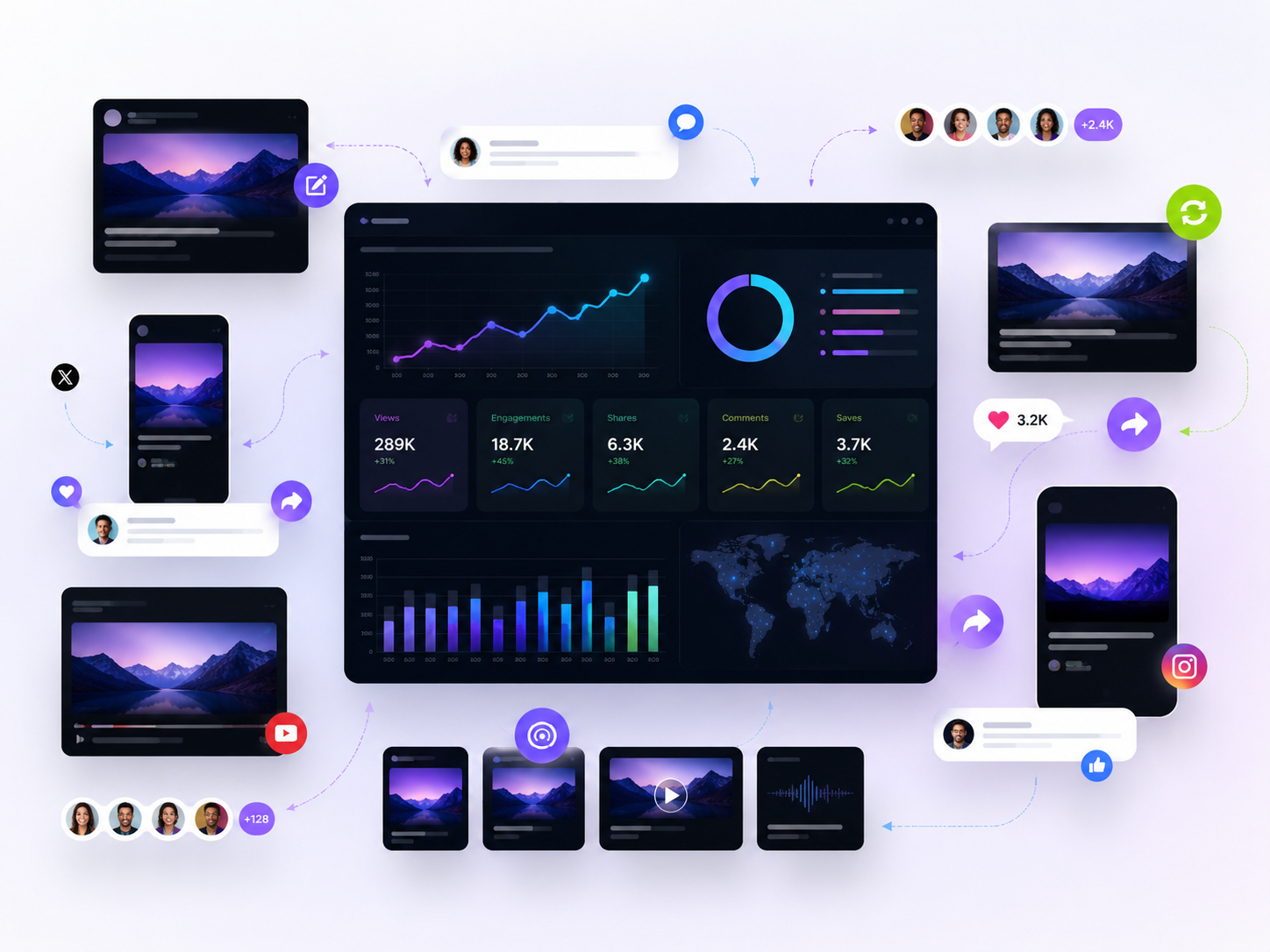
This is where distribution comes in.
Even strong content needs the right context to reach the right people. This may involve organic distribution, support through paid advertising, repurposing content or adapting one idea into several different formats.
A good strategy does not rely on every post achieving maximum results on its own. Instead, the individual elements work together. One post may attract attention, another may provide more information, and a third may direct the user towards a specific action.
Effective social media marketing is not just about publishing regularly. It requires planning, distribution, analysis and consistent communication with the audience.
One idea can have more than one life
Quality content does not necessarily need to be used only once. On the contrary, a strong topic can be developed in different formats without becoming repetitive.
For example, an expert video can later be turned into a carousel with the key takeaways, short Stories highlighting individual points, a LinkedIn post or a more detailed article on the website. The same content can also serve as the basis for an advertising message aimed at an audience that has already shown interest in the topic.
This approach allows a good idea to reach more people while eliminating the need to constantly create content from scratch. More importantly, different formats can serve different roles in the user journey.
The community provides insights that cannot be planned in advance.
The response after publication is just as important. Comments, direct messages, questions and feedback show how people perceive the content and which topics generate the strongest interest.
These reactions are not simply an addition to the post. They provide valuable insight into the audience’s needs, questions and expectations, and can often become the foundation for future topics, new formats or better-targeted campaigns.
For example, if a particular question appears repeatedly in the comments, this is a clear signal that the topic deserves more in-depth content. If a video is saved and shared significantly more than others, this may show what type of information the audience finds most useful.
This is how communication stops being one-way. The brand does not simply publish; it observes, listens and uses feedback to improve its next decisions.
When distribution and audience communication are part of the strategy, content starts working for longer and more effectively. Instead of remaining a one-off post in the calendar, it becomes part of a broader process connecting content, audience and real marketing goals.
5. Social media works best as part of a system
Social media rarely works best in isolation. The strongest results come when content is connected to the other marketing channels and each one has a clear role in the user journey.
Content can create the first contact with the brand and attract attention. Paid advertising can expand reach and target a more precisely selected audience. The website, in turn, gives people the opportunity to learn more, explore a specific service or product, see proof and take the next step.
When these elements are connected, communication becomes much more consistent. A user may first see useful content on social media, then come across an ad, and later visit the website and submit an inquiry. Every touchpoint in this process helps build trust and gradually brings the person closer to a decision.
That is why a social media strategy should not be evaluated solely by the number of monthly posts, likes, or views. These metrics matter, but they do not tell the whole story.
The more important question is whether the content supports the entire customer journey. Does it attract the right people, give them enough reason to take an interest, guide them toward the next step, and work in sync with advertising, the website, and other marketing activities?
Social media delivers the best results when it is part of a broader digital marketing strategy that connects content, advertising, the website, and analysis of user behavior.
A successful social media presence is built on clear direction, consistent content, and ongoing performance monitoring.
Not every post needs to sell. But every post should have a reason to exist.
When business goals, content, distribution, advertising, and the website all work toward the same objective, social media stops being merely a publishing channel and becomes a real part of the business’s marketing system.
6. Data shows what works and what needs to change
Managing social media does not end when content is published. Analyzing performance is essential for understanding which topics, formats, and messages genuinely resonate with a specific audience.
It is important to look beyond likes and consider metrics such as reach, saves, shares, profile visits, website clicks, direct messages, and conversions. Each of these metrics provides a different type of insight into user behavior.
For example, high reach shows that content is reaching more people, but it does not necessarily mean they are genuinely interested. Saves and shares are often stronger signals of usefulness, while clicks and inquiries show whether the content successfully guides the audience toward the next step.
When this data is analyzed regularly, the strategy can be adjusted in time. This means content is not created out of habit, but developed based on real behavior and measurable results.
7. Consistency builds recognition
One of the most important characteristics of a strong social media presence is consistency. This does not simply mean posting frequently, but maintaining a consistent communication style, clear themes, and a recognizable way of presenting the brand.
When a brand uses consistent messaging, visual style, and tone of voice, the audience finds it easier to recognize and remember. Over time, this creates a sense of stability and professionalism.
Consistency also helps different formats and campaigns feel like part of one cohesive system. Even when the topics change, the brand’s overall identity remains clear.
This is especially important in an environment where users see vast amounts of content every day. Recognition is not built through one strong post, but through a series of consistent interactions.
8. Content should evolve alongside the business
A social media strategy is not a static document. It should change alongside the business, audience, and market.
Over time, new services, new target groups, changing competitive conditions, or shifts in user behavior may emerge. This means the content must adapt as well.
Regular performance reviews help identify which topics are no longer relevant, which formats perform better, and where there is an opportunity for a new type of communication.
This flexibility is precisely what makes a strategy sustainable in the long term. There is no need to start from scratch every month, but it is important to review the direction and adjust it when necessary.
A good strategy evolves alongside its audience
There is no universal social media model that works equally well for every business. Even a well-developed strategy must be monitored, analyzed, and adapted according to the audience’s actual behavior.
Over time, it becomes clear which topics hold attention, which formats generate more engagement, what questions people ask, and what encourages them to take the next step. This information helps make content more precise, more useful, and closer to the real needs of potential customers.
It is important not to base decisions on intuition alone. Data from social media, advertising campaigns, and the website can reveal much more than which post received the most likes. It can show which topics drive visits, which formats generate interest in a specific service, and where users lose the motivation to continue.
This is where the difference between simply having a presence and managing social media strategically becomes clear. The goal is not to follow the same plan without change, but to build a system that improves with every new insight.
The strongest results come when a strategy has a clear foundation while remaining flexible enough to evolve alongside the business, market, and audience. In this way, content does more than maintain an active profile—it becomes a tool for making better marketing decisions.
Frequently asked questions
How often should a business post on social media?
There is no one-size-fits-all posting frequency that works for every business. It is more important for content to be consistent, high-quality and tied to clear goals than to publish simply for the sake of staying active.
What type of social media content works best?
The most effective content depends on the audience, platform and business objective. Educational posts, case studies, video content, product demonstrations and behind-the-scenes content can each play a different role in the strategy.
How do you measure business results from social media?
In addition to reach and engagement, you should track website visits, direct messages, enquiries, sign-ups, purchases and other actions linked to specific business goals.
WANT YOUR SOCIAL MEDIA TO WORK WITH A CLEAR STRATEGY?
We create content that does more than maintain activity—it follows clear business goals, reaches the right audience and works in sync with your other marketing channels.
Book an online meeting