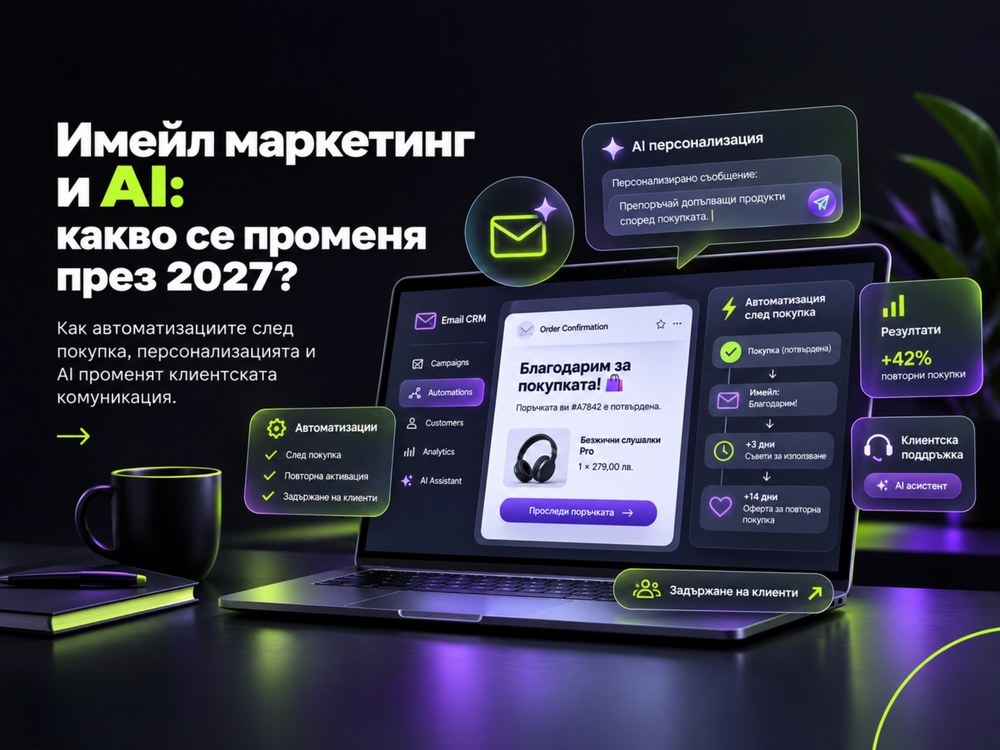
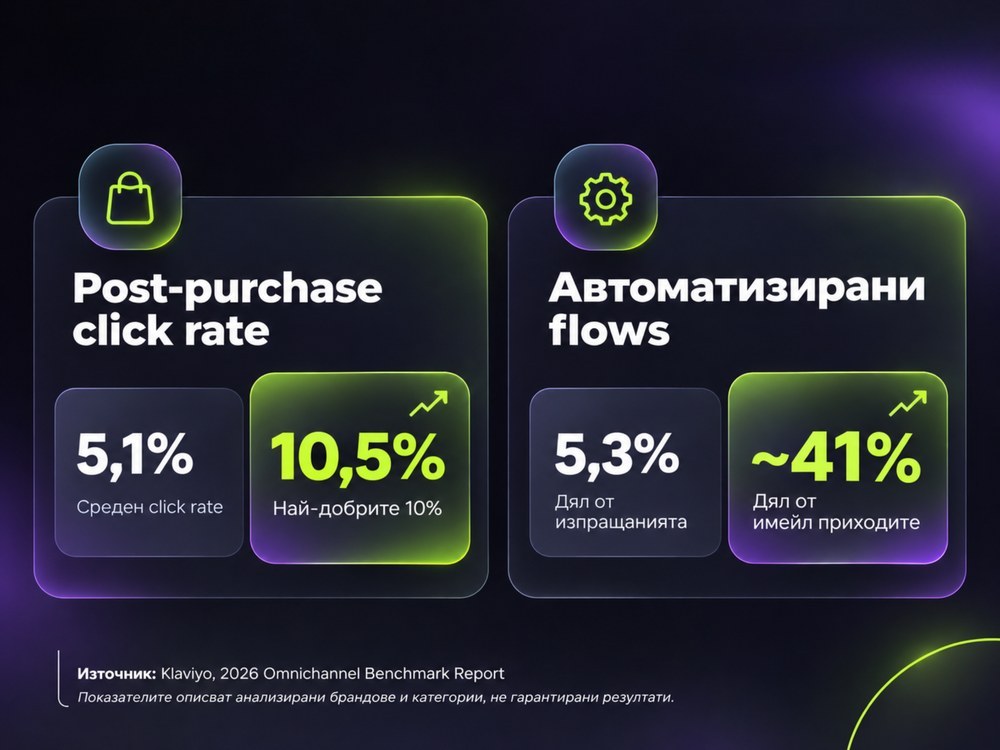
But what happens after a customer clicks “Place order”? Usually, they receive an automated email with a brief message, an order number, and payment information. For many companies, this is just a necessary technical step. In fact, this moment can be one of the most important opportunities to build lasting customer relationships. According to data from 2026 Omnichannel Benchmark Report by Klaviyo, the top-performing 10% of post-purchase email automations achieve a 10.5% click rate. By comparison, the average click rate in this category is 5.1%.
This doesn’t mean every order confirmation will achieve similar results. But it does show that post-purchase communication shouldn’t be treated as an insignificant part of marketing. On November 2, 2026, Klaviyo published an article featuring examples from real B2C brands and recommendations for order confirmation emails in 2027. The company highlights several topics: automation, personalization, the use of AI, the mobile experience, and the connection between customer service and email marketing. These trends raise a bigger question.
Answering this requires a careful look at the data, technology, and consumers’ real needs.
1. Why is post-purchase communication becoming increasingly important?
Traditional email marketing is often associated with discount campaigns, seasonal offers, product collections, and special promotions. All of these have their place in a marketing strategy. But post-purchase emails stand apart in one fundamental way: the recipient has already taken action and expects information from the business. When we order a product online, we generally want confirmation that everything went through successfully.
Then come the follow-up questions: Has the payment been received? Are the products and quantities correct? When will the order ship? How can I track the delivery? What should I do if I made a mistake? Who should I contact if there’s a problem?
At this point, the customer has a specific need for information. If the company responds promptly and clearly, it can reduce uncertainty and build trust. If the information is delayed or incomplete, even an otherwise successful purchase can become a frustrating experience.
From customer acquisition to relationship building
Many companies focus their marketing efforts on the first sale. That’s understandable. Without new customers, it’s difficult for a business to grow. But the real economic value of customer relationships doesn’t end with the first order. Delivery, product use, customer support when needed, and the possibility of a repeat purchase all come next. Email marketing can serve several purposes at once here. It informs customers, supports customer service, provides useful content, and, when appropriate, creates opportunities for future communication. That doesn’t mean every email has to sell something. On the contrary, sometimes the best way to build loyalty is to provide exactly the information a customer needs, without asking for anything in return.Key takeaway: After a purchase, customers don’t necessarily need another offer. First, they need reassurance, clarity, and predictability.
2. What do Klaviyo’s 2026 data show?
To understand where email marketing could be headed in 2027, it’s useful to look at the results published for the previous year. Klaviyo describes its 2026 Omnichannel Benchmark Report as an analysis of data from more than 110,000 brands using the platform. In its public materials, the company compares different types of email campaigns and automations, including welcome flows, abandoned cart flows, browse abandonment flows, and post-purchase flows. The data show significant differences between types of communication.
Post-purchase automations: 5.1% vs. 10.5%
According to the reported metrics: Average click rate for post-purchase email automations: 5.1%. Click rate for the top-performing 10%: 10.5%. Average revenue per recipient in this category: 1.80 USD. Revenue per recipient for the top-performing 10%: 2.77 USD. A few points of clarification are needed here. First, post-purchase is a broader category than order confirmation emails. It can include different messages and automated sequences sent after a purchase. So 10.5% is not a proven average specifically for transactional confirmations. Second, the results of top-performing brands shouldn’t be treated as a benchmark every online store can automatically achieve. Third, platform data reflect a specific customer base, industries, and measurement methods.
Why are these results interesting?
The gap between the average result and the performance of the top 10% shows that there is considerable variation within the category. This may be linked to a range of factors, including content relevance, product type, automation structure, customer behavior, or the quality of the user experience. However, the published metrics do not establish exactly which factor accounts for the difference. We cannot conclude that any one design, AI tool, or personalized recommendation alone drives the improvement.
Automations vs. bulk campaigns
Klaviyo also published broader email marketing benchmarks for 2026. According to the data, bulk email campaigns account for approximately 94.7% of sends, while automated flows make up around 5.3%. Despite their lower volume, automations generate nearly 41% of the total revenue attributed to the email channel in the analyzed dataset. This is particularly interesting because it highlights the difference between the volume of communication and the results it generates. A business may send plenty of newsletters yet still miss opportunities if it lacks well-organized automations at key points in the customer journey. This does not prove that every automation will be more profitable than every campaign. It shows that automated communication deserves its own strategy, budget, and optimization process.
Want more sharp articles and usable strategy notes?
This subscribe block feels more natural within the content. It appears after readers have already received some value, rather than being pushed on them at the very top or bottom without context.
What are the limitations of the research?
The publicly available information does not allow us to independently verify every aspect of the methodology. We do not have access to the full raw dataset, all the rules for including brands, the industry breakdown, or every detail of the attribution model. In addition, revenue per recipient is the revenue attributed to recipients according to the measurement model used. It is not the same as net profit or proven incremental revenue caused solely by email. The right approach, then, is to use these metrics as a guide for analysis, not as a promise of future results.Key takeaway: Klaviyo’s data supports the importance of automated emails, but does not prove that any specific AI feature guarantees higher sales.
3. Transactional emails are no longer just digital receipts
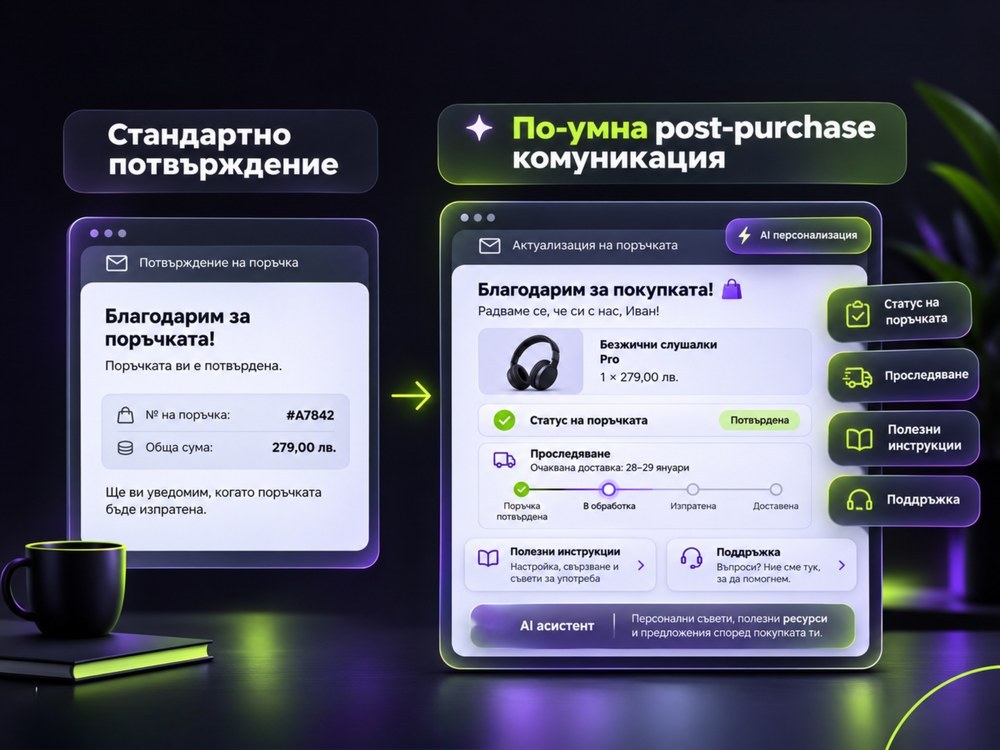
Order confirmation emails have a relatively clear primary purpose. They need to confirm that an order has been received and provide the information customers need to know what happens next. In its November 2, 2026 article, Klaviyo highlights that these messages are an essential part of customer service. The company recommends making them timely, clear, consistent with the brand, and optimized for different devices. At first glance, these recommendations may seem obvious. In practice, however, many online stores use their platform’s default templates with few changes. As a result, customers receive technically accurate information, but not necessarily a great user experience.
What information should the email include?
A well-structured order confirmation should include the information relevant to the specific purchase: Order number and date. Names, quantities, and prices of the items purchased. Total amount, including applicable taxes and fees. Payment confirmation or details of the payment method. Delivery address, where applicable. Selected delivery method. Estimated processing or delivery time, if known. Tracking information or an indication of when it will be provided. A clear way to contact customer service. Access to the applicable terms for cancelling, returning, or changing the order.
Not every email needs to include all of this information in the same format. For example, for a digital product purchase, physical delivery details can be replaced with access instructions. For a service booked in advance, the date, time, and rescheduling terms may be more important. The key principle is that the message should answer the customer’s actual questions.
Information hierarchy matters
Imagine two different emails. The first opens with a huge banner, several promotional messages, and an extensive brand story. Only then does the order number appear. The second opens with a clear confirmation, shows the products ordered, and provides information about the next steps. Even if the first design looks more attractive, the second will probably be more convenient for someone who simply wants to make sure everything is in order. That’s why a good transactional email design shouldn’t be judged on aesthetics alone. It should also be judged by how easily recipients can find the information they’re looking for.
4. Trend for 2027: From Automation to Contextual Personalization
Email marketing automation isn’t new. Online stores have been using automated confirmations, shipping updates, abandoned cart reminders, and welcome sequences for years. What is gradually changing is the ability of these automations to use more context. A traditional flow usually follows a predefined sequence of actions. For example, after a purchase, a confirmation is sent, followed by shipping information and, later, a request for feedback. With a more advanced approach, the content can adapt to the product type, order details, and available customer information.
Example: online cosmetics store
Imagine two customers ordering different products. The first buys a moisturizing cream. The second orders a set of daily skincare products. Both should receive clear information about their purchase. But the useful content that follows may differ. The first customer could receive instructions on how to use the specific product. The second might benefit from an explanation of the order in which to use the products in the set. In this case, personalization doesn’t necessarily mean an additional sale. It means more useful communication.
Where does artificial intelligence fit in?
AI can help prepare content, group customer needs, analyze interactions, and review existing automations. For example, a system connected to a product catalog could suggest relevant usage instructions after a purchase. But this is an opportunity that must be implemented with reliable data and clear rules. AI must not invent product features, delivery times, warranty terms, or other factual information. Automated personalization must also stay within the permitted purposes for processing customer data. For 2027, the most interesting direction isn’t simply generating more text with AI.The more important opportunity is using automation and AI to provide accurate information at the right time.
5. AI Agents in Email Marketing: What Can They Do, and What Are Their Limitations?
Klaviyo presents its AI marketing agent, Composer, as a tool integrated with the platform’s data and features. According to the company, it can help create emails, audiences, automations, and marketing campaigns. This is part of a broader technology trend in which AI tools are gradually moving beyond standalone writing assistants to systems that work with more business context. In email marketing, this development could be useful in several areas.
Content creation
AI can suggest options for subject lines, preview text, prompts, and content structure. When working with a specific brand, the tool can draw on its established tone of voice, terminology, and pre-approved messaging. This can reduce some of the manual editorial work. But a final review remains essential, especially for terms related to payments, deadlines, and consumer rights.
Automation analysis
With sufficiently reliable data, AI can help identify issues in existing flows. For example, it might flag a message with low engagement or a sequence that contains too many unnecessary steps. Any such recommendation should be checked against the real business context. A low click rate on a purely informational email does not always mean it is underperforming. If customers find everything they need in the message itself, no click may be perfectly normal.
Handling customer inquiries
In some systems, an AI agent can support customer service by retrieving order status information or directing customers to relevant resources. It’s important to distinguish between providing information and taking action. Explaining how a customer can change their delivery address is one thing. Actually changing the details in the system is another. The latter requires reliable identity verification, appropriate permissions, activity logging, and clearly defined conditions for handing off to a person.
AI does not replace marketing strategy
Even the best-integrated tool cannot determine on its own what matters most to a particular business. One store may have delivery issues. Another may struggle with a low repeat-purchase rate. A third may receive too many customer inquiries because its information is incomplete. In each case, the right automation will be different. That’s why AI should be seen as a tool for execution and analysis, not a substitute for strategic decisions.
6. Five examples from real brands: what can we learn?
In its post, Klaviyo looks at five B2C brands that take different approaches to order confirmation emails. These examples should not be treated as a ranking of proven effectiveness. The material provided includes no comparative results for click rates, conversions, or revenue for any of the five brands. Their value is primarily editorial: they show different ways to organize information and express brand identity.
Olipop: Confirmation as Part of the Brand Experience
Olipop uses a positive, celebratory communication style. Rather than presenting the order solely as an administrative transaction, the brand includes a visual message that reflects the character of its products. At the same time, customers are told to expect a separate message when their order ships. This combination shows that a brand’s personality can come through in transactional communications, too.Practical takeaway: A brand can stay true to its character without obscuring essential purchase information.
Farmhouse Pottery: Minimalism as a Functional Advantage
Farmhouse Pottery opts for a clean design. The email focuses on the confirmation, the purchased product, and the essential details. One thoughtful touch is the easy way to contact customer service by replying to the message. This approach means customers don’t have to navigate multiple pages to find out how to get help.Practical takeaway: A clear information structure can be more valuable than visual complexity.
Vuori: Clear Terms Are Part of Good Customer Service
Vuori communicates its order processing terms and the restrictions on making changes after an order is placed. From a marketing perspective, this may not be the most appealing message. But clear rules offer real value to customers. When a company explains in advance what is and isn’t possible, it reduces the risk of mismatched expectations.Practical takeaway: Transparency should take priority over making every message seem as positive as possible.
Methodical Coffee: The Follow-Up Recommendation
In the example reviewed, Methodical Coffee includes recommendations for additional branded products. This shows how the post-purchase moment can be used to showcase more of the range. However, this approach won’t necessarily suit every customer or market. An upsell may be premature for a first-time buyer. For a loyal customer who has purchased repeatedly, a relevant recommendation could feel more natural. Separately, including promotional content in a transactional message should comply with applicable direct marketing rules.Practical takeaway: Personalization and segmentation matter, but the legal basis for promotional communications should be checked in advance.
Recess: Humor as Brand Identity
Recess uses humor in its confirmation message. This approach works as a communication concept because it fits the brand’s character. But this style wouldn’t be suitable in every situation. Buying a recreational product, for example, creates different customer expectations than buying specialized medical equipment.Practical takeaway: The tone of communication should reflect both the brand’s character and the product’s context.
What the Five Examples Have in Common
Despite their different visual and communication approaches, these best practices share several principles: Clear confirmation of the purchase. Easy-to-find order information. Understandable next steps. Alignment with brand identity. A convenient way to get help. None of these principles necessarily requires a complex AI tool. This matters because technology should improve the core customer experience, not make up for unclear communication.
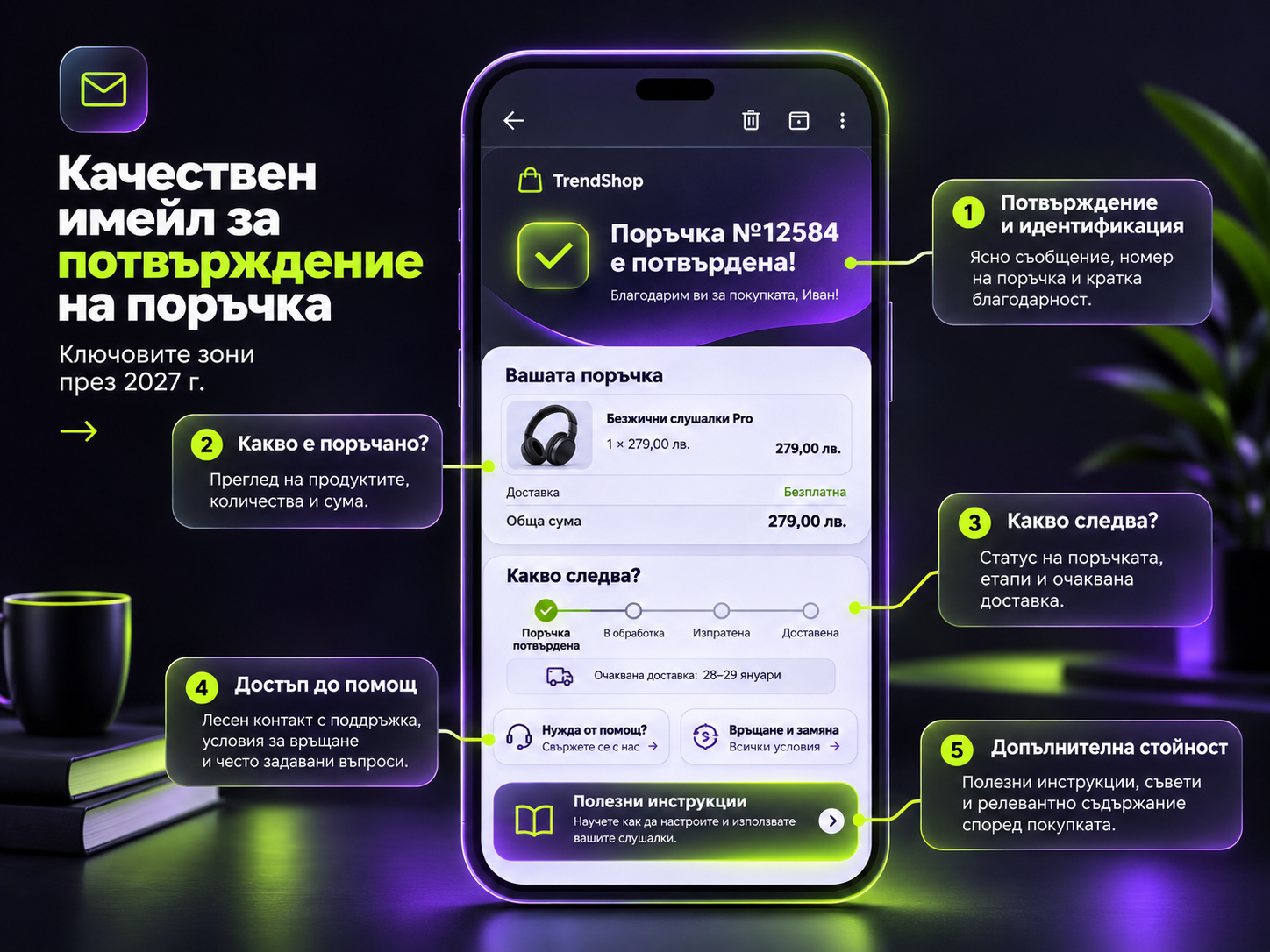
7. What Should a High-Quality Order Confirmation Email Look Like in 2027?
The best design isn’t always the most complex. This is especially true of transactional messages, where users usually have a specific task: finding information. That’s why well-structured communication should lead with what matters most. First section: Confirmation and identification The top of the email should clearly state that the order has been received. A suitable heading would be: “Order No. 12584 confirmed” This can be followed by a brief thank-you message that matches the brand’s tone. It doesn’t need to be long. If customers want to check whether their order went through, that information should be immediately visible. Second section: What was ordered? Next comes a summary of the purchased products. For physical goods, it’s useful to include small product images, names, quantities, and prices. Avoid ambiguity here. If the price includes specific fees, discounts, or shipping costs, present that information clearly. Third section: What happens next? Customers should know when to expect an update. If the order is about to be processed, say so clearly. If a tracking number is already available, it can be included. If the system doesn’t yet have a confirmed delivery date, don’t invent one just to make the message seem more complete.
Fourth section: Access to help Contact information should be easy to find. Useful elements include a link to customer service, an FAQ page, and instructions for changing or returning an order. This is especially important when products require specific handling, installation, or preparation. Fifth section: Added value After the essential information, you can include useful content directly related to the purchase. For example: Getting-started instructions. Storage and care information. A product setup guide. A link to warranty terms. Information on activating a digital service. This kind of content can improve the experience without turning the message into another sales campaign. If you add product recommendations, discounts, or other marketing messages, assess separately whether these elements are legally permitted.
8. Mobile design is now a core requirement, not an extra optimization
When a customer receives an order confirmation, they may well open it on a mobile device. This makes mobile usability an essential part of communication quality. Klaviyo recommends using responsive templates, concise headings, clearly structured content, and buttons that are easy to tap. But mobile optimization is about more than making an email fit on a small screen. What should you check? First, whether the most important information is visible without excessive scrolling. Second, whether the text remains readable across different screen sizes. Third, whether buttons and links are easy to use. Fourth, whether images slow loading or push essential information out of view. Fifth, whether the email still makes sense when images are blocked. This last point is often overlooked. If the entire confirmation consists of one large image, users may not receive the information they need under certain email client settings. That’s why essential details should be available as live text. Design should make action easier. If the main goal is to check an order’s status, the tracking button should be clearly labeled. If the main goal is to provide information, there’s no need to prompt users to take several different actions. A cluttered email creates cognitive load. Good structure reduces the number of decisions customers need to make to find what they’re looking for. This will remain an important principle in 2027, whatever advances AI brings.
9. Transactional emails, GDPR, and marketing consent: where’s the line?
One of the most important topics for Bulgarian and European online stores is the distinction between transactional and promotional communications. An order confirmation email serves primarily an informational purpose. It is sent in connection with a specific purchase and contains information needed to process it. A promotional email has a different goal: to promote a product, service, or commercial offer. Problems can arise when the two purposes are combined. Why should additional product recommendations be handled with care? Imagine a standard order confirmation for a pair of sports shoes. It includes the order number, the products, the total, and the expected next steps. This is typical transactional communication. If the same message also includes an offer for a new collection at a promotional price, some of its content now has a direct advertising purpose. This changes the legal assessment of the message. In the European Union, the processing of personal data is governed by the GDPR, while electronic direct marketing is also subject to ePrivacy legislation and its national provisions. Under certain conditions, an exception may apply to marketing similar products to existing customers, but this is not blanket permission to send any kind of promotional offer. Specific requirements must be met, including those concerning transparency and the ability to opt out. What’s the practical recommendation? First, design transactional messages to clearly serve their informational purpose. Second, assess promotional elements separately against the applicable legal requirements. Third, put reliable systems in place to manage customers’ marketing preferences and objections. Fourth, AI systems should not automatically add promotional offers just because they identify an opportunity for an additional sale.Key takeaway: High engagement with transactional emails does not automatically mean they can be used as an advertising channel.
10. What email marketing trends do the data point to for 2027?
Klaviyo’s published results are not an official forecast for the entire market in 2027. But when considered alongside developments in CRM platforms and AI tools, they allow us to formulate several well-founded strategic hypotheses. Trend 1: Greater focus on post-purchase communication. This is the conclusion most directly supported by the source. When automations account for a significant share of reported email revenue, businesses have good reason to pay more attention to their existing customer relationships. More strategies are likely to treat the post-purchase period as a distinct stage, rather than a technical extension of the sale. Trend 2: Personalization based on actual needs. Personalization shouldn’t be limited to using a customer’s first name. Content tailored to a specific purchase, product category, or support need may offer greater value. This calls for better-organized data and a clearer connection between the CRM, product catalog, and order system. Trend 3: AI will help maintain automations. AI tools can reduce some of the time spent preparing content, analyzing performance, and editing flows. But their practical value will depend on the quality of integrations and the reliability of the data. A business with inaccurate product data won’t solve the problem simply by using a more advanced AI model. Trend 4: Greater emphasis on customer self-service. Customer portals, tracking pages, FAQ sections, and automated support can reduce the need for manual inquiries. This doesn’t mean doing away with human service. Quite the opposite. A good system should make it easy to reach a person when a question is complex or requires additional assistance.
Trend 5: Stricter management of data and marketing permissions. As personalization grows, so does the importance of rules governing the use of customer information. Companies will need to maintain clear boundaries between customer service, analytics, and direct marketing. This is especially important for businesses selling in multiple countries, where they must comply with more than one regulatory framework. Trend 6: Fewer automations without a purpose, more automations with a measurable function. Creating a new flow isn’t an end in itself. An online store may have numerous automations that overlap, generate excessive communication, or even contradict one another. A more mature strategy will require every automation to have a clear purpose. For example, one confirms the order, another provides shipping updates, a third delivers educational content, and a separate marketing sequence can be used when there is a valid legal basis. Trend 7: Service quality will be part of marketing effectiveness. Long-term customer relationships aren’t built through advertising messages alone. They also depend on the actual post-purchase experience. When customers receive timely information, clear terms, and quality service, it creates a stronger foundation for future relationships with the brand. This doesn’t guarantee a repeat purchase. But it’s a more sustainable approach than a strategy that relies solely on the next promotional campaign.
Turn email marketing into a growth engine
Effective email marketing goes beyond sending newsletters. It’s a well-designed system of automation, personalized communication, and strategic decisions that helps businesses build long-term relationships with their customers.
Make your emails work for you